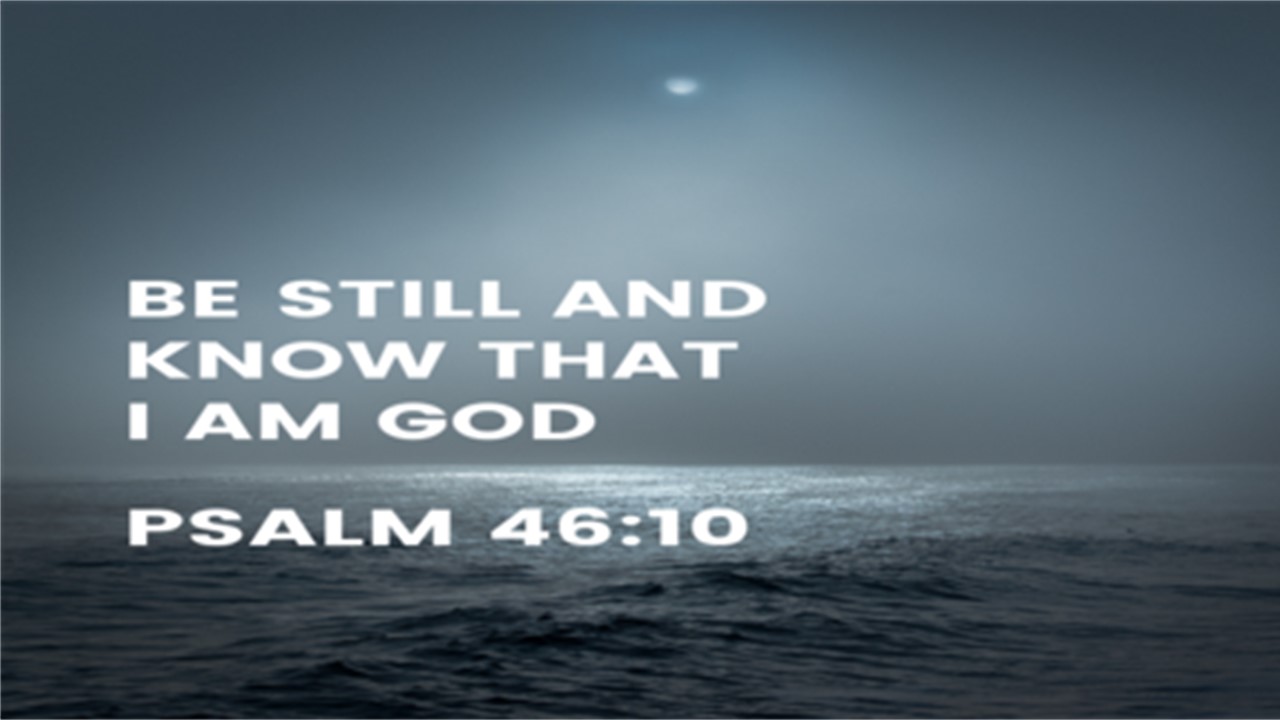
A frequently used phrase in Christian circles is, “Be still and know that I am God”, quoted from Psalm 46:10. It typically invokes images of peacefulness in a beautiful, calm setting. Noted Christian author, speaker, and vocalist Sheila Walsh commented on it by saying …
Be still and know that I am God. The original Hebrew root of “be still” doesn’t mean “be quiet”; it means “let go”. That’s very different, don’t you think? Let go and know that I am God! Let go of trying to control your spouse! Let go of your worry about your finances! Let go of your unforgiveness! Let go of your past! Let go of what you can’t control – and rest in the knowledge that God is in control!
I confess, I have a tendency to memorize these “feel good” verses (or partial verses) and ignore the context of the Bible passage they are found in. Big mistake on my part! I’m missing the fullness of God’s message. For years, I have pictured myself in a lush, green meadow as I sat quietly before the Lord; no distractions, just the two of us. As I look at the full content of the verse, and then the verse in context, the Psalmist is painting a very different picture … a vivid picture of God’s power.
9 He makes wars cease to the ends of the earth. He breaks the bow and shatters the spear; he burns the shields with fire. 10 He says, “Be still, and know that I am God; I will be exalted among the nations, I will be exalted in the earth.” 11 The LORD Almighty is with us; the God of Jacob is our fortress. – Psalm 46:9-11 (NIV)
The scenario the psalmist describes is no meadow. It’s a depiction of God showing His power over all the earth. He is Almighty. He is our Fortress. He is the Everlasting God. We are called to be still, in the middle of our struggles, as we “let go” and hear God say, “Be still, I’ve got this”. God, in His mighty power, has gone before us and won the battle.
 Simple Faith